
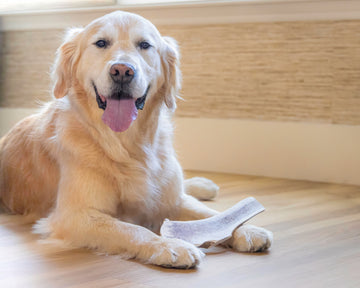

Here's the thing, anyone who has spent even a minute around a puppy knows they go through an intense teething phase and will chew on just about anything they can sink their little shark teeth into. As a dog owner, finding safe, durable, and natural chewing options is essential. For these reasons, antler chews have gained popularity as an excellent alternative to synthetic chews, offering numerous benefits for your growing pup.

Antlers are naturally shed by elk, deer, and moose each year, making them a sustainable and eco-friendly option. They are rich in minerals such as calcium and phosphorus, which support healthy bone development in puppies. Unlike rawhide, high-quality antlers don't splinter easily, have no artificial ingredients, and typically last much longer than other chew toys.
Are Antler Chews Safe for Your Puppy?
A question we frequently get here at RidgeRunner is whether antler chews are safe for puppies. The short answer: YES. Having raised many of our own pups over the years, we have given these little “land-sharks” their first antler as early as 8 weeks old. While their tiny, sharp puppy teeth aren’t quite ready for super-tough chews, some of our less-dense antlers are a gentle and tasty way to start. And, as your puppy gets older, you can adjust the size, style, and density of the chew based on their chewing habits.
Below is our recommended lineup of antler chews for your puppy, from softest to most durable:
1. Quarter Split Elk

Quarter Split elk antlers are an excellent starter option for puppies. As the name suggests, these antlers are cut lengthwise to expose the nutritious marrow inside.


2. Moose Paddle

Moose Paddles are the flat, palm-like sections of a moose antler. Their distinctive consistency, texture, and shape set them apart from other antlers in our lineup. Puppies find these chews especially engaging, which keep them busy.


3. Whole Elk
 Whole Elk antlers offer a less-dense outer core, filled with lots of delicious marrow. Although they are incredibly durable, they just may be too hard for the developing teeth of very young or small puppies. Consider starting with Split Elk antlers and progressing to Whole Elk antlers as your puppy grows.


4. Split Moose

Split Moose antlers have a hard outer layer, which makes them a perfect challenge to help develop your puppy's chewing skills. Consider ordering a larger Split Moose antler for medium and large-breed puppies who need something more substantial to gnaw on.


Safety Tips for Using Antler Chews
- Always supervise your puppy when they are chewing an antler.
- Start with a low-density antler for younger puppies and those with softer teeth.
- Choose the right size - the antler should be large enough that your puppy is unable to fit the entire piece in their mouth.
- Remove the antler if it develops sharp edges or points.
- Replace the antler when it becomes small enough to swallow.

Final Thoughts on Puppies and Antler Chews
Consider your puppy's size, age, and chewing style when selecting an antler chew. Very young puppies or smaller breeds may do best with Split Elk antlers and Moose Paddles, while larger or more aggressive chewers might prefer Whole Elk and Split Moose antler options.
By offering your puppy a naturally shed antler chew, you provide a safe and healthy outlet for their natural chewing instincts while also supporting their dental health and development.
Have fun and enjoy your amazing pup!